Patient Services
Online Bill Pay
Quickly and easily make a payment online using your debit, credit, or HSA card.
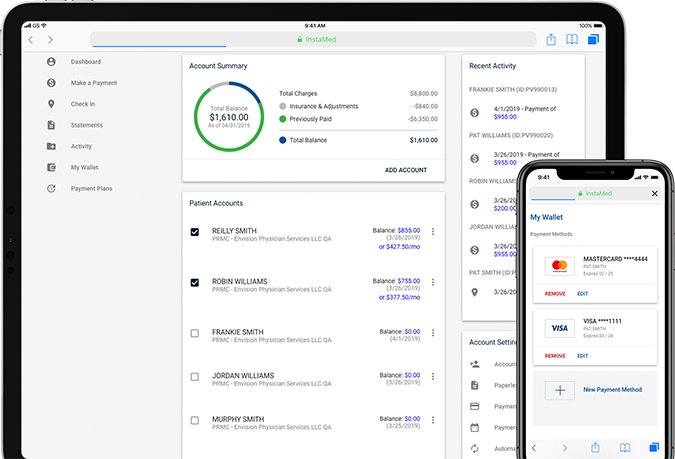
Patient Portal
Log into the patient portal to view your chart, ask your doctor a question, or read a summary of your visit. To make a Payment, click the “Make a Payment” button above.

Patient Forms
Please fill out the release of information form if you would like records sent to or from St. Paul Eye Clinic. This completed form can be sent via fax to 651-738-6804 or email to scanning@stpauleye.com.
If you have any questions about completing this form, please call our Medical Records department at 651-738-6500, Option 5.
Insurance Partners, VSP, and Financing
St. Paul Eye Clinic, P.A. is a provider of many of the major insurance carriers in our area, including BlueCross BlueShield, Health Partners, Humana, Medica, Ucare, United Healthcare, and Medicare. Please contact your insurance carrier to confirm that St. Paul Eye Clinic, P.A. is in your care network. Please bring your current insurance card(s) to your visit.
If you’re a member of the Vision Service Plan (VSP), either through your employer or independently, St. Paul Eye Clinic is pleased to be a provider for routine eye exams. VSP only covers routine eye care, like yearly exams for those under the plan. When your vision care goes beyond that—like concerns about migraine headaches, cataracts, or other specialty care—those medical claims would need to be submitted to your health insurance provider rather than VSP.
If you are unsure about whether or not you have VSP, or if you’re considering that type of coverage, please visit VSP.com and contact one of their representatives. They’ll also be able to tell you exactly what your coverage entails.
We offer special financing and payment plans for eligible patients.
Frequently Asked Questions
What’s the difference between a routine eye exam and a medical eye exam?
A routine (wellness) eye exam is generally an annual visit focused on checking vision, screening for eye disease, and updating glasses and/or contact lens prescriptions. Insurance plans commonly define routine exams by outcomes such as diagnosing refractive conditions (for example, nearsightedness, farsightedness, or astigmatism).
A medical eye exam is used when you have an eye disease, injury, symptoms, or a chronic health condition that requires diagnosis, management, documentation, and sometimes coordination with other physicians (for example, diabetes, cataracts, dry eye, glaucoma, infections, or other medical complaints).
Sometimes, a visit that starts as a routine exam can shift to a medical exam if a medical problem is discovered or needs to be evaluated during the appointment.
Why are routine and medical eye exams billed differently?
Routine and medical eye exams are billed differently because different types of insurance are designed to cover different kinds of care:
- Vision plans (such as VSP) are generally designed to cover routine vision care, like checking vision and determining prescriptions for glasses/contacts, along with screening in otherwise healthy eyes.
- Medical insurance is generally designed to cover care related to medical conditions and eye disease—when diagnosis, management, treatment, and medical documentation are required.
Because the distinction is driven by why you’re being seen and what is found during the exam, your insurance may classify and process the visit differently based on the services provided and diagnoses addressed.
Refraction note (a common source of confusion): A refraction is the part of the visit that determines your eyeglass prescription—often recognized as the “which is clearer: one or two?” portion of the exam. It can also help determine the basis for certain visual complaints or the progression of certain eye disease. Vision plans often cover refraction, but medical insurance may not cover refractions, even when it covers the medical exam—so patients may be responsible for the refraction charge if it’s not covered.
How we help avoid surprises: We encourage patients to share any symptoms or concerns when scheduling so we can book the most appropriate visit type and help set expectations for how the appointment is likely to be billed.
How long does an eye exam typically take?
Most routine and medical eye exams are typically scheduled for 60–90 minutes, depending on your visit type and whether additional testing is needed.
A big part of that time is the technician work‑up, where an ophthalmic technician partners with you and your doctor by collecting key information and completing the “pre‑exam” steps that make your physician time more focused and efficient. This work‑up often includes reviewing medical history, checking vision, measuring eye pressure, and completing any additional testing ordered by your provider (for example, imaging or visual field testing).
Some specialized visits are intentionally longer. For example, some retina evaluations can run 2½–3 hours, and pediatric cycloplegic (“Cyclo”) exams may run longer because of the time needed for dilation.
How long will my eyes be dilated?
Dilation is often recommended because it allows your doctor to better evaluate the inside of the eye (including the retina and optic nerve).
How long dilation lasts varies by person and the drops used.
Because dilation can increase light sensitivity and blur near vision temporarily, we recommend that you bring sunglasses and plan your day accordingly. If you don’t have sunglasses, we will provide you with a disposable pair to protect your eyes.
What should I bring to my appointment?
To help your visit run smoothly, please bring your photo ID, your current health/medical insurance card(s), your vision plan insurance card (if applicable) and be prepared to confirm a couple of identifiers at check‑in.
It’s also helpful to bring your current glasses. if you wear contact lenses, wear your contacts to your appointment as well as bring any details about the brand/prescription you currently use. Please also come prepared to discuss any medications you may be taking and any relevant prior records, if available.
Please also be prepared to pay your insurance co-pay at the time of check-in as applicable.
Do you accept my insurance?
We participate in many medical insurance plans, but policy coverage and network status can vary by plan and by the reason for your visit.
One key point (and a common source of confusion): routine vision benefits are sometimes “carved out” to a separate vision plan, even when your medical plan is in‑network. If you share your insurance information with us before your appointment (and bring your card), we can help you understand how your visit will be billed—but ultimately, your insurer is the best source for benefit details.
Do I need a referral?
Some insurance plans require a referral or authorization for specialty care. If your plan requires one, please obtain it before your appointment so your visit and billing go smoothly.
If you’re not sure whether a referral is required, contact your insurer directly (the phone number on your card is usually the fastest path), or call our appointment team and we can help you identify what your plan typically requires.
What is a refraction—and will insurance cover it?
A refraction is the part of the visit that determines your eyeglass prescription—often recognized as the “which is clearer: one or two?” portion of the exam. It can also help determine the basis for certain visual complaints or the progression of certain eye disease.
Whether refraction is covered depends on your coverage type. Medicare, for example, does not cover refraction. Because coverage varies, a helpful approach is: confirm benefits ahead of time, and if you have both medical and vision coverage, bring both cards so we can bill appropriately.
Will I receive a copy of my glasses prescription?
Yes. If a glasses prescription is written for you, you will be provided a copy for your records. If you have questions about your prescription or need another copy later, our team can help point you to the right next step.
Can I drive after my eyes are dilated?
Many patients are comfortable driving after dilation, but dilation can cause temporary light sensitivity and blurred near vision for a period of time. Because individuals respond differently, some patients prefer to bring sunglasses and see how they feel; others choose to arrange a driver—especially for the first dilated exam.
If you’re concerned about driving, you can plan ahead by arranging transportation or scheduling at a time when you can take it easy afterward.
Why does part of the visit feel like “waiting”?
In many visits, “waiting” is actually a clinical step—especially if dilation is recommended. To dilate your eyes, we place a few drops of medicine in your eyes, and those drops typically take about 20–30 minutes to work (with variability).
We believe transparency matters: explaining this up front helps patients understand that the visit is designed for thoroughness and accuracy—not inefficiency—and helps set realistic expectations about total appointment time.
What if I’m running late or need to cancel?
We appreciate as much notice as possible if you need to reschedule. Our written no‑show policy asks that appointments be cancelled at least 24 hours in advance when possible.
If you arrive 15 minutes or more late, we will do everything we can to see you. However, in certain situations, you may need to be rescheduled if the provider cannot see you without impacting other scheduled patients.
How do appointment reminders work (text/email/phone)?
Patients may authorize appointment reminders by telephone, email, and text.
If your contact information changes, please let us know—accurate contact details help us confirm visits, share logistics, and reduce missed appointments.
I think I’m having an eye emergency—what should I do?
If you experience sudden vision loss, significant eye pain, flashes/floaters with new vision changes, an eye injury, or other urgent symptoms, contact the clinic immediately at 651-738-6500 or seek emergency evaluation. Some eye conditions can worsen and threaten vision if not managed appropriately and timely.
If my child is the patient, does a parent/guardian need to be present?
No, however, anyone under the age of 18 needs consent signed by a parent or legal guardian. If there are special guardianship circumstances, bring any appropriate documentation so we can ensure the correct person is authorized to consent.
How do you protect my privacy?
Our clinic privacy policy explains that protected health information may be used for treatment, payment, and healthcare operations, and it also describes common, practical workflows—such as appointment reminders and calling a patient’s name in the waiting room—used to run care safely and efficiently.
If you ever have questions about how information is used or shared, you can request a copy of the full privacy policy and ask our team for clarification.
Do you have an optical shop (glasses/contacts)? What insurance is accepted there?
Yes.
Our opticians are highly trained experts at helping patients find the right glasses and contact lenses to meet their personal and professional lifestyles. From fashion to function, we offer products and services to meet our patients’ needs. We are Medicare and VSP providers.
If you’re unsure whether your vision benefits apply to your eyewear purchase, bring your vision insurance information and our team can help you understand next steps.
How do I request medical records or get forms completed (DMV, work, school)?
I don’t have insurance (or I’m choosing not to use it). Can I get a cost estimate?
Yes. Under the No Surprises Act, out of network, uninsured or self‑pay patients can request a Good Faith Estimate. Contact our office, and we will be happy to provide you with one.
If you receive a bill that is higher than the Good Faith Estimate, you may have options to discuss the bill with the provider and, in certain circumstances, use a federal dispute process.
How does billing work for this procedure?
It’s normal to receive up to four (4) separate bills related to your surgical care, because different parts of your care are provided—and billed—by different organizations: (1) the facility (Midwest Surgery Center) for items like nursing/technical staff, equipment, medications, and supplies used during your stay; (2) anesthesia services for the assessment, supervision, and administration of anesthesia before, during, and after your procedure; (3) the surgeon’s professional services (St. Paul Eye Clinic, P.A.); and (4) pathology, only if tissue is sent to a lab for evaluation.
If you have a question about a specific bill, please call the phone number listed on that bill, since each entity handles its own billing.
We also recommend contacting your insurance company ahead of time to confirm these entities are in-network for your plan and to verify coverage, because your procedure may be subject to copays, coinsurance, and/or deductibles based on your specific benefits.
Who will confirm my surgery arrival time—and when will I hear from them?
A registered nurse from Midwest Surgery Center will call you 1–2 working days before your surgery to review your medical history, answer questions, and give you your arrival time.
If you have not received a call by 12:00 p.m. one (1) business day before surgery, please contact the facility you are scheduled at. Midwest Surgery Center in Woodbury at (651) 642-9199 or Midwest Surgery Center in Eagan at (651) 515-1996
Please note: St. Paul Eye Clinic, P.A. does not set surgery arrival times—your arrival time comes directly from the surgery center nursing team.
If you are having surgery at a location other than what’s listed above and are unsure of what your arrival time is, please call 651-738-6300 to speak to the surgery scheduling team.
Where should my Primary Care Physician send my pre-operative History & Physical?
If you are having surgery at Midwest Surgery Center in Eagan OR Woodbury – your H&P can be faxed to 1-866-998-0619. If you are having surgery at another facility, please call 651-738-6300 to speak to the surgery scheduling team to confirm where to have this sent.
We'd love to see you.