











Age-Related Macular Degeneration: What It Is, Who's at Risk, and Why Early Detection Matters
Age-related macular degeneration, often referred to as AMD, is one of the leading causes of vision loss in adults over 50. While AMD does not usually cause total blindness, it can significantly affect central vision, making everyday tasks like reading, driving, and recognizing faces more difficult.
For patients in the Minneapolis and St. Paul area, understanding AMD and catching it early can make a meaningful difference in long-term eye health.
What Is Age-Related Macular Degeneration?
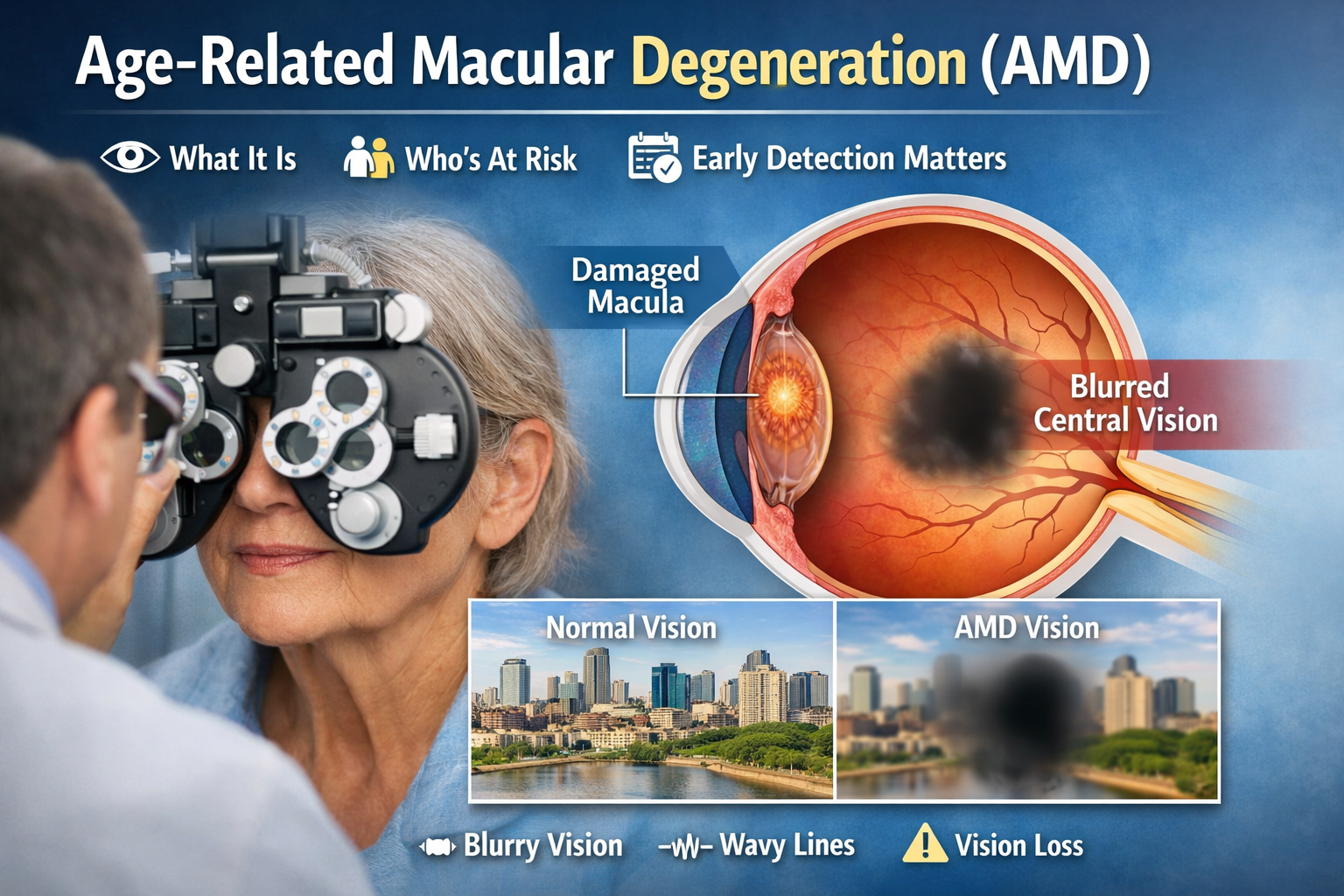
AMD is a condition that affects the macula, the central portion of the retina responsible for sharp, detailed vision. When the macula becomes damaged, central vision gradually declines while side vision typically remains intact.
There are two main forms of AMD. Dry AMD is the more common type and develops slowly over time as the macula thins. Wet AMD is less common but more severe, caused by abnormal blood vessel growth beneath the retina that can lead to rapid vision changes.
Because AMD often progresses gradually, many people are unaware they have it in the early stages.
Who Is at Risk for AMD?
Age is the strongest risk factor, particularly for adults over 50. However, AMD does not develop from age alone. Several additional factors can increase risk for individuals throughout the Twin Cities.
A family history of macular degeneration raises the likelihood of developing the condition. Smoking is one of the most significant modifiable risk factors and has been strongly linked to faster progression. High blood pressure, cardiovascular disease, and high cholesterol may also contribute.
Lifestyle factors such as long-term sun exposure without proper eye protection and poor nutrition can play a role as well. Because some risk factors cannot be changed, regular eye exams become especially important for early identification.
Early Symptoms Are Often Subtle
In its early stages, AMD may cause little to no noticeable symptoms. Some patients experience mild blurriness, increased difficulty reading in dim lighting, or a need for brighter light when doing close work.
As AMD progresses, straight lines may appear wavy, colors may seem less vivid, or a dark or blurry spot may develop in the center of vision. These changes can be gradual, which is why many people attribute them to normal aging rather than an eye condition.
Routine comprehensive eye exams can detect retinal changes before symptoms become disruptive.
Why Early Detection Matters
Early detection allows eye doctors to monitor AMD closely and recommend strategies that may help slow progression. While there is currently no cure for AMD, early diagnosis opens the door to treatment options, nutritional guidance, and lifestyle adjustments that can help preserve vision.
For patients with more advanced AMD, early identification allows timely intervention that may reduce further vision loss. The earlier changes are detected, the more options are available for managing the condition effectively.
At St. Paul Eye Clinic, advanced diagnostic tools are used to evaluate retinal health and identify early signs of macular degeneration.
AMD Care in the Twin Cities
St. Paul Eye Clinic is proud to serve patients throughout Minneapolis and St. Paul with comprehensive, patient-focused eye care. Our experienced ophthalmologists and optometrists take the time to educate patients, answer questions, and create personalized care plans based on individual risk factors and eye health needs.
We believe that informed patients are empowered patients. Understanding AMD is an important step toward protecting your vision for years to come.
Schedule an Eye Exam at St. Paul Eye Clinic
If you are over 50, have a family history of macular degeneration, or have noticed changes in your central vision, scheduling a comprehensive eye exam is an important next step. Early detection can help preserve vision and provide peace of mind.
The team at St. Paul Eye Clinic is here to support patients across the Twin Cities with trusted, professional eye care. Contact our office today to schedule your eye exam and take a proactive approach to your long-term vision health. Contact us here.